The Pacific Ocean is home to many wonders, but also to a raw, powerful force of nature: the tropical cyclone. In the western part of this colossal ocean lies a region notorious for generating the most frequent and most intense of these storms—Typhoon Alley.
This is more than just a geographic location; it’s the engine room of the world’s typhoons, shaping the lives, history, and landscapes of the nations in its path.
Check out 5murfs Travel Videos
Where Exactly is Typhoon Alley?
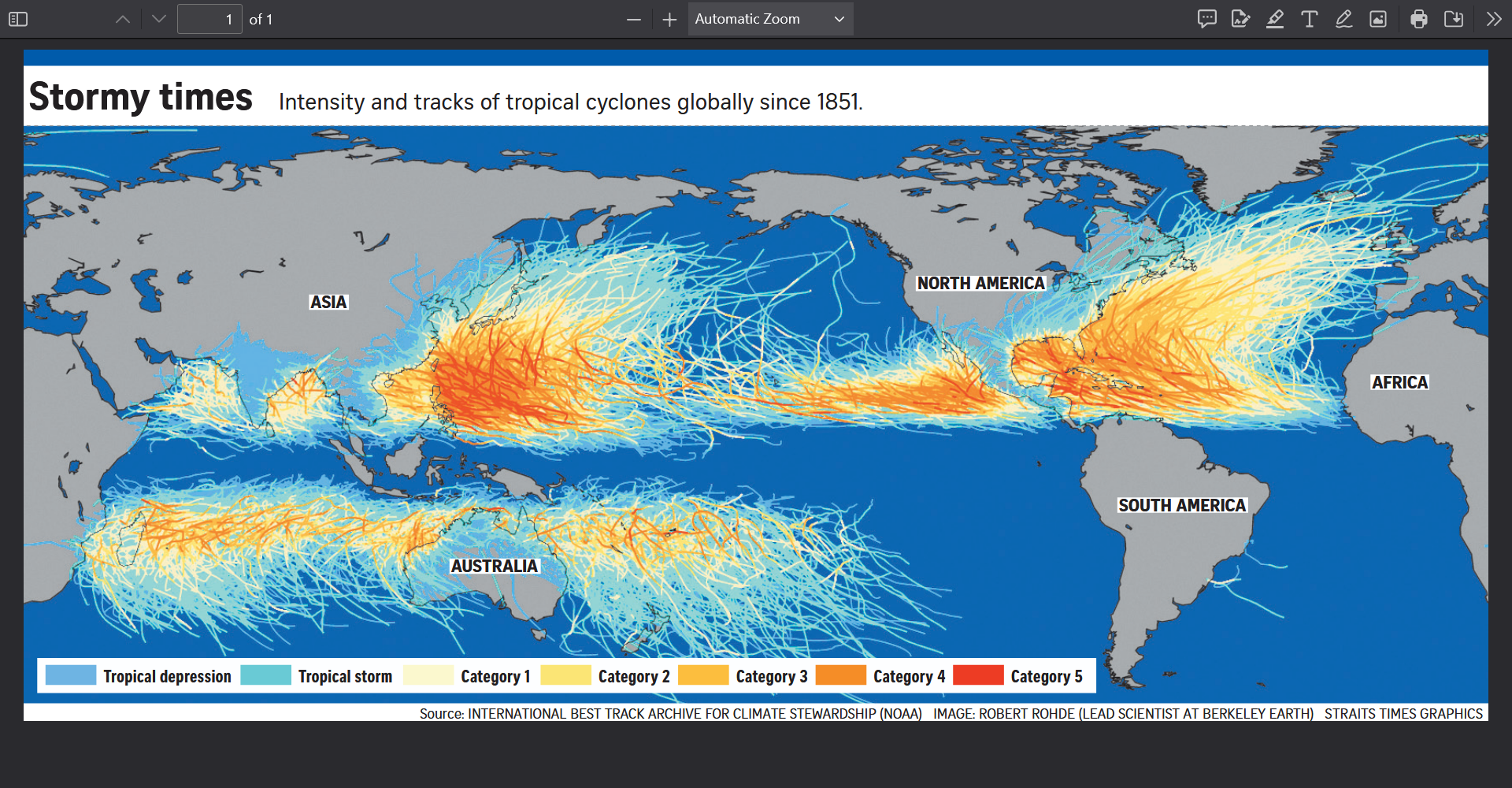
While not a formal, fixed boundary, “Typhoon Alley” generally refers to the Northwestern Pacific Ocean Basin, specifically the area between $180^\circ$ and $100^\circ\text{E}$ longitude.
It is the largest and most active tropical cyclone basin on Earth, accounting for nearly one-third of the world’s annual tropical cyclones. The region’s energy is felt by numerous East and Southeast Asian nations, with the Philippines, Japan (especially the Ryukyu Islands/Okinawa), and China often bearing the brunt of the storms.
Why is it so Storm-Prone?
The conditions in the Northwest Pacific are simply ideal for tropical cyclone formation and intensification. The region checks all the boxes necessary to create these massive rotating storms:
-
Warm Sea Surface Temperatures: The vast, deep warm waters provide the immense heat energy needed to fuel the storms.
-
High Humidity: Ample moisture in the atmosphere supports the formation of towering thunderclouds.
-
Low Vertical Wind Shear: This is crucial. When wind speed and direction don’t change drastically with altitude, it allows the developing storm to remain vertically stacked and organized, letting it grow into a powerful vortex.
-
The Coriolis Effect: Being far enough from the equator, the Earth’s rotation provides the necessary spin to organize the low-pressure system into a tropical cyclone.
These factors combine to make this basin unique in its ability to spawn storms virtually year-round, although the peak season usually runs from July to November.
Check out 5murfs Travel Videos
The Super Typhoon Threat
The typhoons that emerge from this region are known for their sheer power. The Northwest Pacific is the only basin that regularly produces Super Typhoons—storms with sustained winds equivalent to a Category 4 or 5 hurricane in the Atlantic (150 mph/241 km/h or higher).
This incredible intensity means coastal communities face not only destructive winds but also catastrophic rainfall, flooding, and deadly storm surges. For countries like the Philippines, situated directly in the path of the most common storm tracks, preparing for and recovering from multiple high-impact storms each year is an unfortunate, annual reality.
Preparing and Adapting
For residents and mariners in Typhoon Alley, storm preparation is a way of life. Governments and communities have developed sophisticated warning systems (like the TCCOR levels used in Japan/Okinawa) and infrastructure built to withstand the annual onslaught.
The stories of survival, resilience, and community support in the wake of these powerful storms are a testament to the human spirit in the face of nature’s fury.
Typhoon Alley is a powerful reminder of the delicate balance of our planet’s climate and the immense energy contained within its oceans.